Former Synagogue Rexingen
Memorial, permanent exhibition, and Isenberg Library
- Opening hours
-
Sundays 2 pm to 5 pm
Wednesdays 4 pm to 6 pm (by appointment) - Admission
- Free admission
- Guided tours/Visits
-
Visits/guided tours available by appointment:
Tel.: 0157 3116 4886 or by E-Mail - Address
-
Freudenstädter Str. 16
72160 Horb-Rexingen
Memorial and educational centre
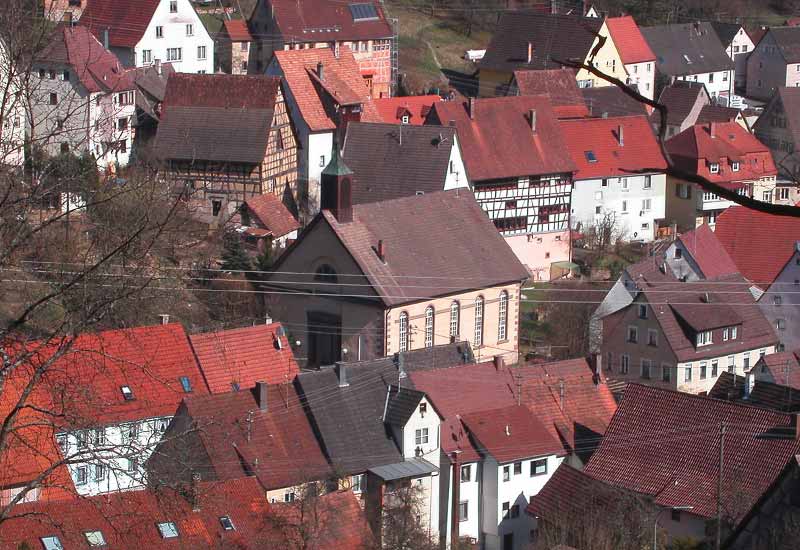
The former synagogue is situated in the heart of Rexingen, a suburb of Horb-on-Neckar. Up to the 1930s it was the religious centre of one of the largest rural Jewish communities in Württemberg. On November 9th, 1938, it was defiled and set on fire. The fire was extinguished but the synagogue was taken from the Jewish community. Since 1952 it has been a Protestant church and is today a memorial and educational centre. An Exhibition tells the history of the building, showing pictures of the life of the Jewish community. On the ground floor, there is a specialized library for Judaica, the Arnold and Friederike Isenberg Library.
Memorial & Church
In Rexingen one finds the unusual situation of the dual use of a former synagogue both as memorial site and church. In 1945, after the extinction of the Jewish community by the Nazis, there was no clear concept for the use of the ruined interior of the building. In 1952 it was handed over to the newly-formed Protestant community who altered it to suit their purposes. In 1997 citizens founded the Association of Patrons and Friends of the Former Rexingen Synagogue to ensure the maintenance and restoration of the building and to research and document the Jewish history of the village.
History of the building
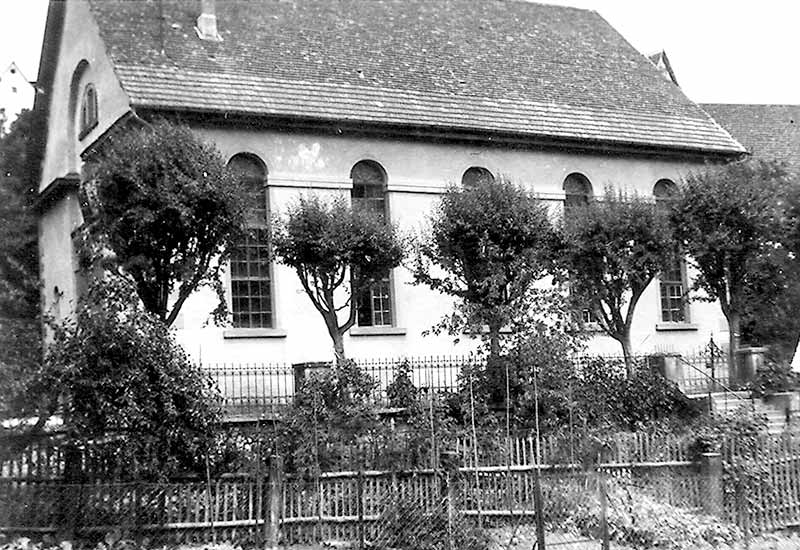
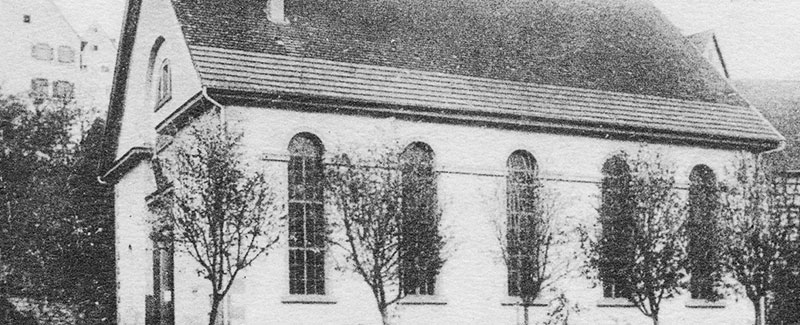
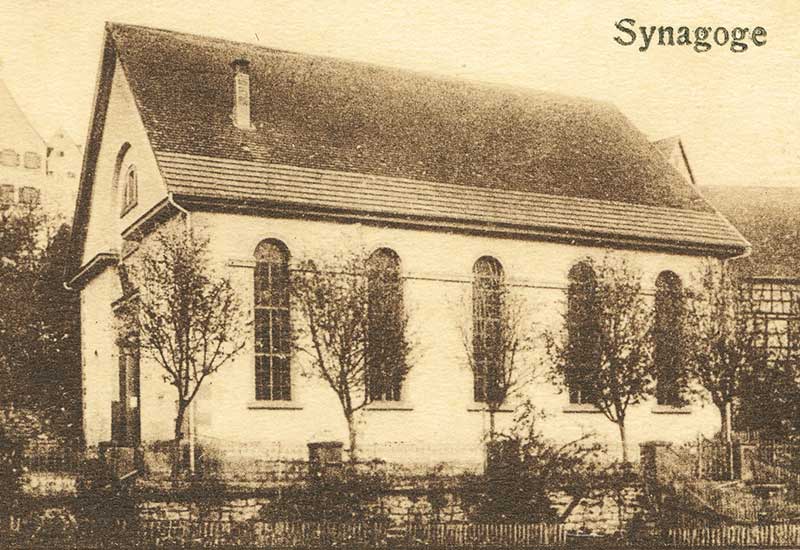
The imposing building in neoclassical style was not the first synagogue in the Swabian rural community. It replaced the first synagogue built in the 18th century which was too small and had become dilapidated. With great pride the “most beautiful synagogue of the rabbinate district” was inaugurated in August 1837. It served the community as their place of worship for 101 years. After the defilement in November 1939 it was variously and inappropriately used and in 1952 was consecrated as a Protestant church.
The old synagogue
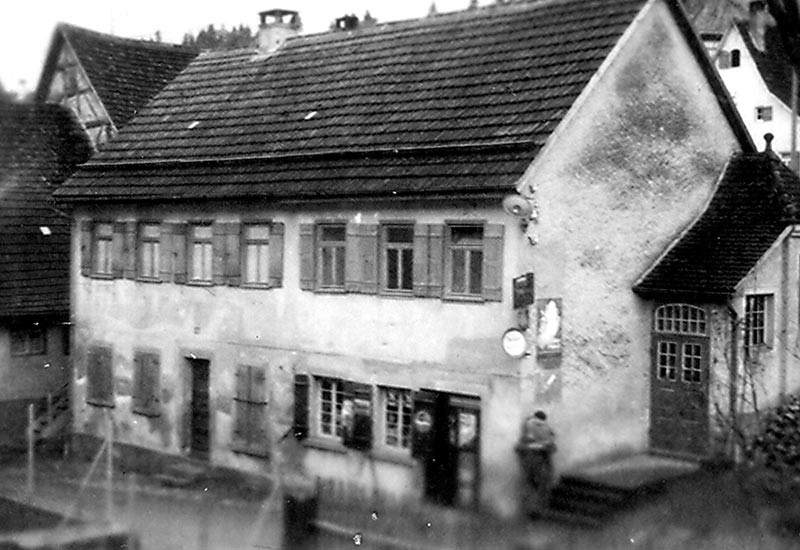
The Jewish community of Rexingen built its first synagogue in the first half of the 18th century. The exact date of building is not known. The synagogue was situated in the immediate vicinity of the buildings of the Knights of Saint John in which the first “protected Jews” lived.
A report dated October 4th, 1835, reads as follows: “The synagogue consists of two buildings, the synagogue itself which is a stone building, and a small wooden annex containing the women’s section. The synagogue is not very old but is very imperfectly built.”
The building, like many other synagogues of the rural Jews in the 18th century, was outwardly inconspicuous, hardly differing from the neighbouring houses.
It was preserved even after the building of the new synagogue and was used for various community functions. For example, it housed the Mikwe, where the ritual bath took place. In 1977, it was pulled down to make room for the widening of Freudenstädter Strasse.
Planning and building the new synagogue
Soon the old synagogue was too small for the fast-growing Jewish community. The building of a new synagogue was already being discussed at the end of the 18th century while Rexingen was still under the rule of the Knights of Saint John.
At the beginning of the 19th century the old synagogue with its confined space had also become dilapidated. In 1830 the District Administration of Horb wrote to the Ministry of the Interior:” The synagogue has been closed for some weeks now and can no longer be entered without risk.”
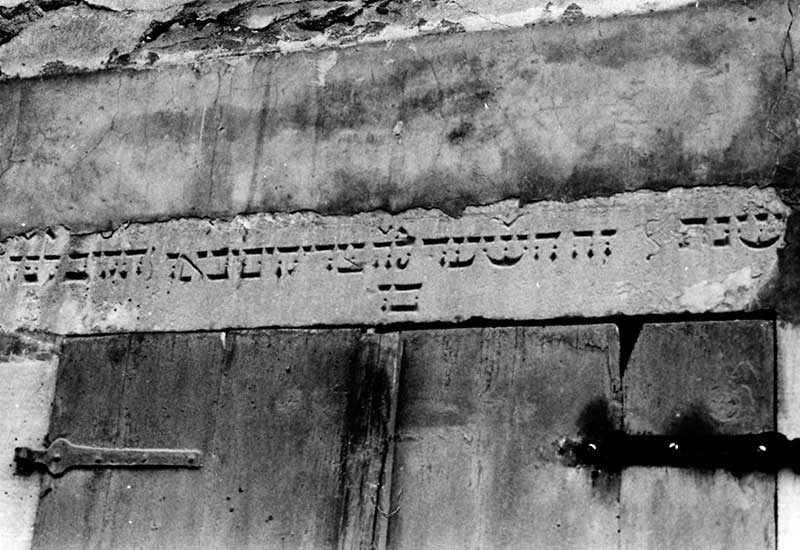
The building site for a new synagogue was available from about 1820. But the financing of such a new building required a huge effort on the part of the Jewish community. At the beginning of 1836 the building was approved by the Israelite Religious Administration of the Kingdom of Württemberg. On July 29th the foundation stone was laid.
The first estimate for building costs amounted to 8,590 gulden. The community then managed to negotiate an offer of 7,590 gulden. While the building was still in progress, it became clear that this financial plan was totally unrealistic. The costs continued to soar and finally amounted to 12,300 gulden.
This meant that the community had to take out a loan of over 5,800 gulden from various creditors. All community members took responsibility for a promissory note for 3,000 gulden as surety on June 17th, 1836.
The King of Württemberg also contributed 300 gulden.
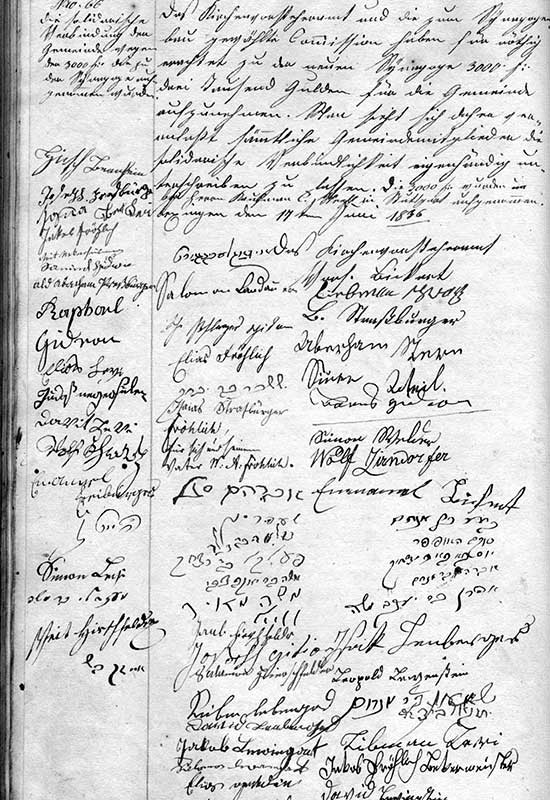
On August 18th 1837, the synagogue was inaugurated. On this day the sermon was preached by Dr. Moses Wassermann, the young rabbi in Mühringen who was in charge of the Black Forest District Rabbinate as of January 1835.
The most beautiful synagogue in the rabbinate district
In 1875 Rabbi Dr. Michael Silberstein described the entire rabbinate district of Mühringen. He wrote of the Rexingen synagogue in the highest terms of praise:
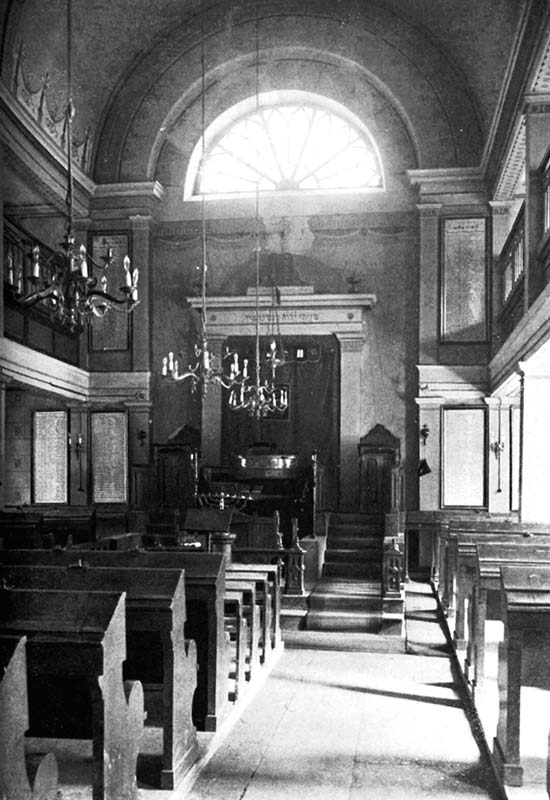
“The synagogue in Rexingen is unquestionably the most beautiful in the rabbinate, with two flights of stone steps leading up to the synagogue which is built on raised terraced ground. In front of the synagogue there is a colonnade with similar steps leading up to it. There are three side galleries for women. The pulpit is placed in front of the Ark of the Covenant which is on the east side opposite the entrance. Steps lead up to the pulpit and to the Ark of the Covenant. Below the pulpit is a marbled stone which the cantor also uses as lectern.
For men attending the synagogue there are subsellia on the left and on the right. These are separated by wide – all too wide – spaces.
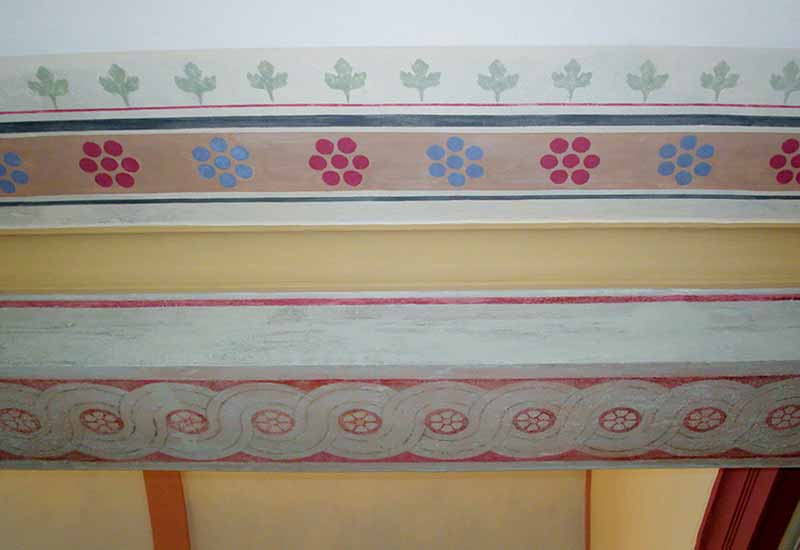
Despite these wide spaces the synagogue easily holds 500-600 people. On the walls, especially on the eastern wall, one can see panels bearing the names of those held in remembrance because of their donations. In 1862, the ceiling of the synagogue was painted tastefully and the woodwork was also given a fresh coating.”
In the name of God to Eretz Yisrael
On February 6th, 1938, a solemn farewell service was held in the synagogue for the first group of Rexingen Jews to emigrate to Palestine, then an English mandate. Many prominent helpers of the emigrants were present, including Dr. Otto Hirsch from the National Representative Agency of German Jews in Berlin.
The chairman of the Jewish community, Viktor Neckarsulmer, stressed in his speech that the new settlement in Palestine – at that time called Malchutia – would always remain linked to Rexingen. He thanked all those who had supported this group of emigrants, especially Dr. Manfred Scheuer, a lawyer from Heilbronn later to become mayor of Shavei Zion.
The retired district rabbi, Dr.Abraham Schweizer from Horb, concluded his speech with these words:
“May God’s angels accompany you on your way! Never forget the homeland in which you leave behind parents and relations. Please them with regular reports and remember this holy place where we so often prayed together!”
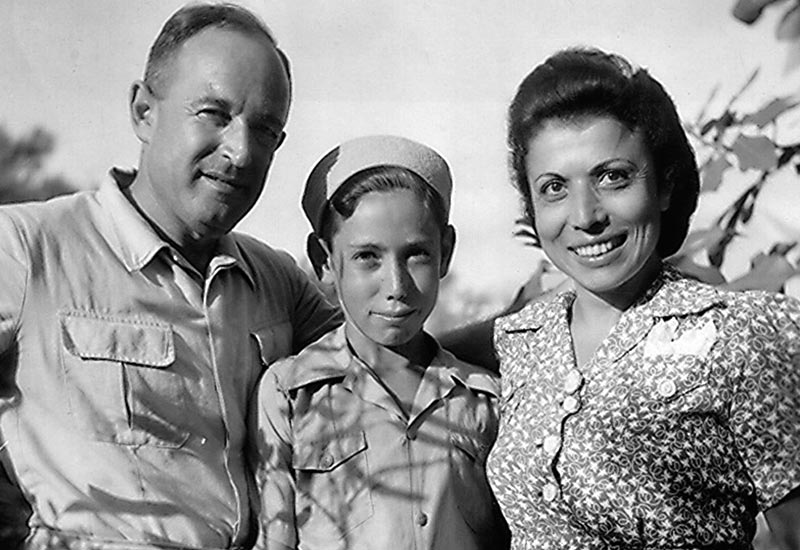
The defilement of the synagogue in November 1938
From a report by Viktor Neckarsulmer who emigrated to Shavei Zion in 1939:
“During the night between November 9th and 10th I was awoken by shouts of “the synagogue is on fire!” I rushed to the synagogue as quickly as I could and was shocked by what I saw. The synagogue was burning in different places. SA-people were tearing out lamps and memorial plaques for the dead from walls and ceiling. They were smashing the lectern, benches and Torah scroll with hatchets and axes. … In the same night the windows of all those houses still in Jewish possession were broken. … The synagogue was still standing but its interior was completely burnt out. Whatever was left - the Torah scroll, the prayer books, the prayer shawls, etc. - was heaped in a corner of the yard and set on fire again. … On my way home I was arrested and brought to the gaol in Rexingen. Others came with me. … Twenty- four hours later we were taken to the gaol in Horb. Two days later we were joined by other Jews from the area and transported as a group to Dachau.
Roughly two weeks after our release from Dachau the policeman on duty asked me to come to his apartment that evening. He told me the following: “ I took a Torah scroll out of the ashes and it’s in fairly good condition. I know that you are part of the second group soon to leave for Shavei Zion. If you’d like to take this Torah scroll with you, you can have it any time.”
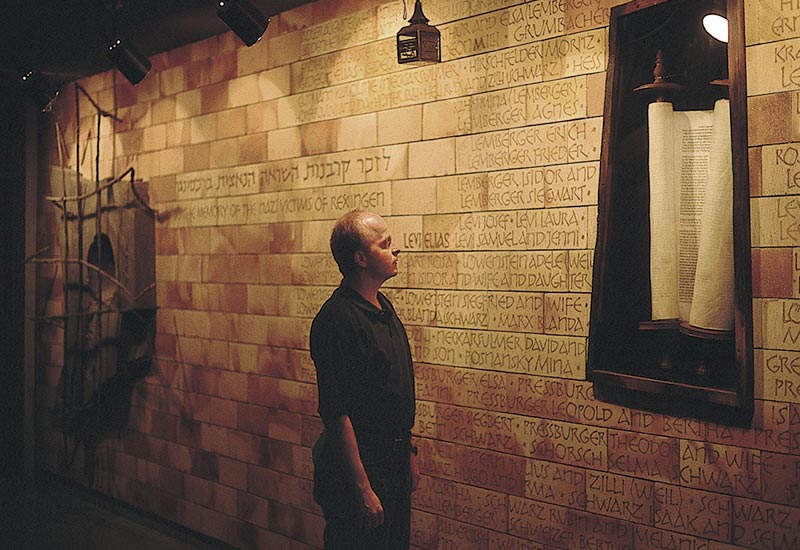
The synagogue as storeroom
After the defilement of the synagogue, it could no longer be used for religious services. The Jewish community gathered in the old synagogue and other buildings. Jakob Fröhlich, the grandson of Max and Augusta Fröhlich from Freudenstädter Straße, reported that he celebrated his bar mitzvah in 1939 in the Jewish restaurant Ratsstube before fleeing as a child to the family of his uncle Julius Fröhlich in Shavei Zion.
In 1939, the Nazis struck the synagogue off the list of protected heritage buildings on which it had been placed in 1927. In that same year the Jewish community for whom the situation was becoming more and more threatening sold the synagogue to the civic community for 7,000 reichsmark.
The NSDAP suggested that the synagogue should be converted into a community centre or gymnasium.
In 1943, the civic community let the synagogue out to the Mauser Weapons Factory in Oberndorf as a storeroom. The synagogue in Mühringen was also let out to the Mauser Factory for the storage of rifle butts. It had been confiscated by the Tax Office in Horb in1943 after the deportation of the last Jews.
The defiled synagogue becomes a Protestant church
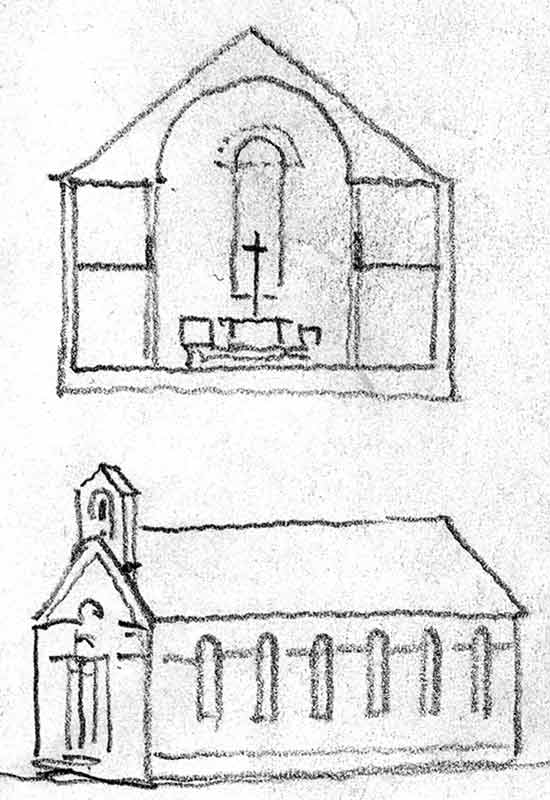
After the war the number of Protestant inhabitants in Rexingen increased considerably. The community of over 350 members needed a church. After a long dispute with the civic community of Rexingen who favoured the use of the synagogue as community hall or gymnasium, the synagogue was finally rented and altered by the Protestants. The support of the Israelite Cultural Association of Württemberg played an important role in this decision.
Three significant changes were made to the building. A suspended ceiling was put in on a level with the women’s gallery. The upper room was then used for religious services, while the new lower rooms served as community rooms. A small bell tower was added to the roof, and the window shaped like a half rosette on the east side was replaced by a high, narrow, latticed window.
In 1972 the former synagogue was once again placed under protection as a historic building.
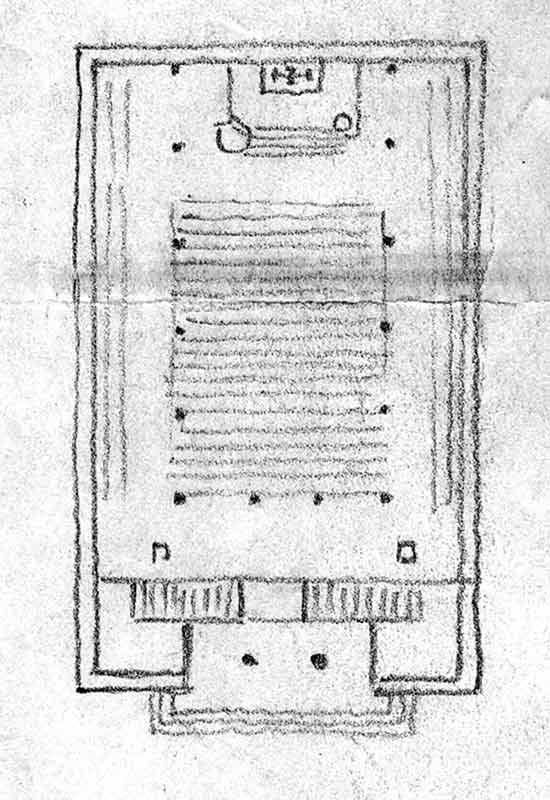
Founding of the association
After 40 years of use as a Protestant church a thorough renovation of the building became imperative. With the incorporation of Rexingen into the town of Horb the latter became owner of the building in 1971. The town was not willing to assume the high costs required for renovation within any foreseeable time. The costs were also too high for the Protestant community as tenant.
In this situation the Association of Patrons and Friends of the Former Rexingen Synagogue was founded on the initiative of the then Vicar Dr. Albrecht Haizmann and with the support of the newly elected Mayor Michael Theurer.
The town of Horb offered the tenancy of the building to the Association free of charge. In return the Association gave the assurance that it would assume the task of restoration and maintenance.
In 2003, thanks to the voluntary commitment of its members, the Association was able to conclude the basic stabilization of the building and the interior renovation of the room on the upper floor used for religious services.
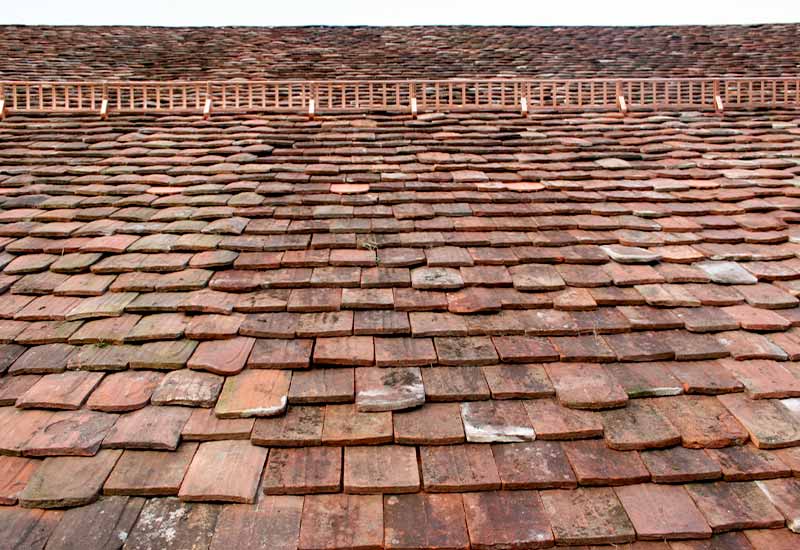
In 2010, the roof was given a new lining and was then covered anew with old handmade tiles.
The next phase of refurbishing will tackle the renovation of the exterior of the former synagogue. The building was erected on a foundation of stilts which is slowly sinking. Measures will be taken to secure the foundation and stop this development. The plasterwork of the building has to be renewed. In addition, a new layout for the space in front of the synagogue is planned.